
House Washing
Low-pressure soft washing that removes mould, salt, cobwebs and dirt from rendered, brick, weatherboard and clad homes. Call Northern Beaches Pressure Cleaning Pros today!
Learn More →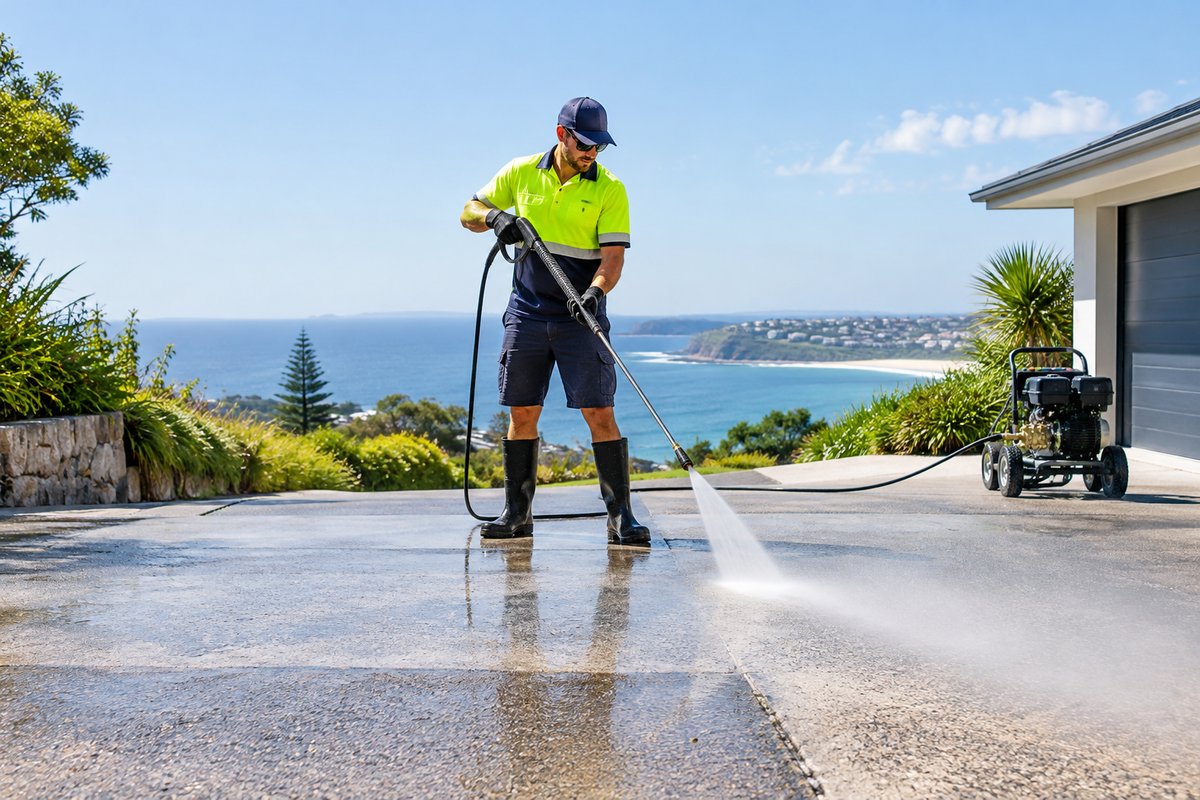
Lift oil stains, tyre marks, mould and grime from concrete, exposed aggregate and paved driveways across the Northern Beaches. Call Northern Beaches Pressure Cleaning Pros today!
Request a Free Quote
Driveways on the Northern Beaches take a beating. Salty, humid air off the ocean keeps shaded concrete damp, so black mould and lichen creep in along the edges and under the carport. Gum leaves and frangipani flowers leave tannin stains, and your car drops oil and tyre marks in the same spot every day. A plain concrete slab in Cromer, a steep exposed aggregate driveway in Avalon and a sandstone strip in Manly all need a different approach, so we match the method to the surface.
We start by pre-treating oil and grease patches with a commercial degreaser and giving it time to break the stain down. Then we clean the full driveway with a rotary surface cleaner. This keeps the pressure even, so you don't end up with zebra stripes or wand marks. Hot water does the heavy lifting on oily concrete. Exposed aggregate and softer pavers get lower pressure and a wider fan tip so we don't loosen stones or wash out joint sand. On mould-heavy areas we apply a soft wash treatment that kills spores at the root, which helps slow regrowth in our damp coastal conditions.
Most people notice their house walls and front path look tired once the driveway is clean. We often pair driveway work with house washing so the whole front of the property matches. If your driveway leads into a paved courtyard or sandstone steps, our paver and sandstone cleaning uses gentler methods suited to those softer surfaces.
From stain assessment to the final rinse, here's what happens on your driveway.
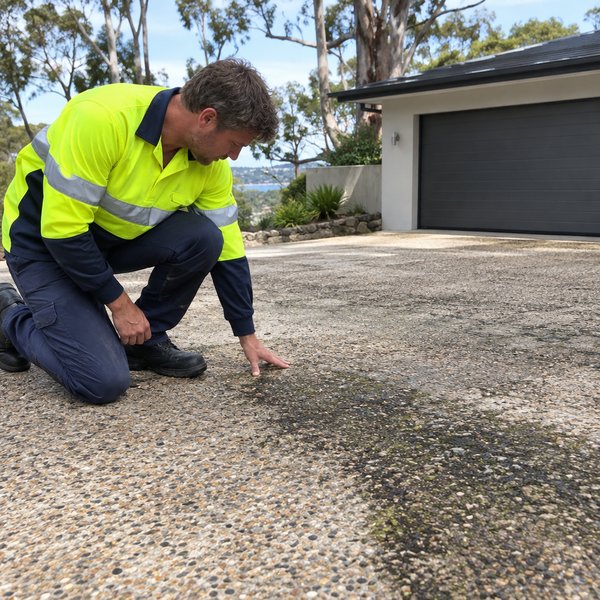
We walk the driveway and identify the surface type, whether it's plain concrete, exposed aggregate, pavers or sandstone. We note oil patches, mould zones, cracks, loose stones and any existing sealer. This tells us which pressure, nozzle and water temperature to use.
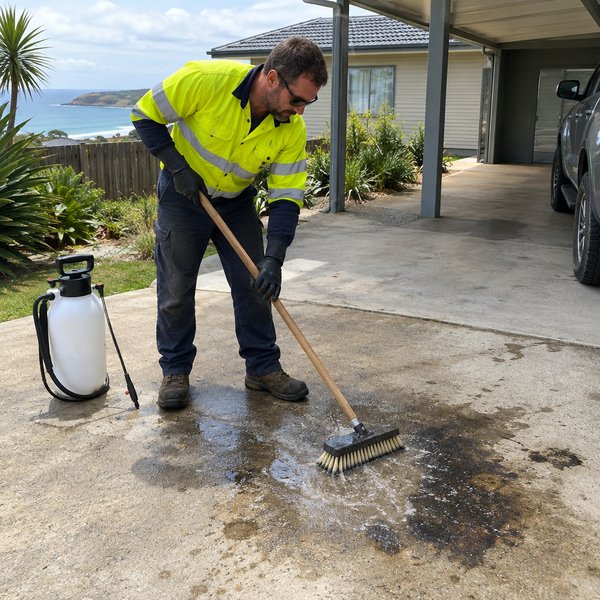
Oil stains get a commercial degreaser worked in with a stiff brush and left to dwell. Shaded areas with black mould or lichen get a soft wash treatment to kill spores before any pressure goes on. We protect garden beds and keep runoff away from drains.
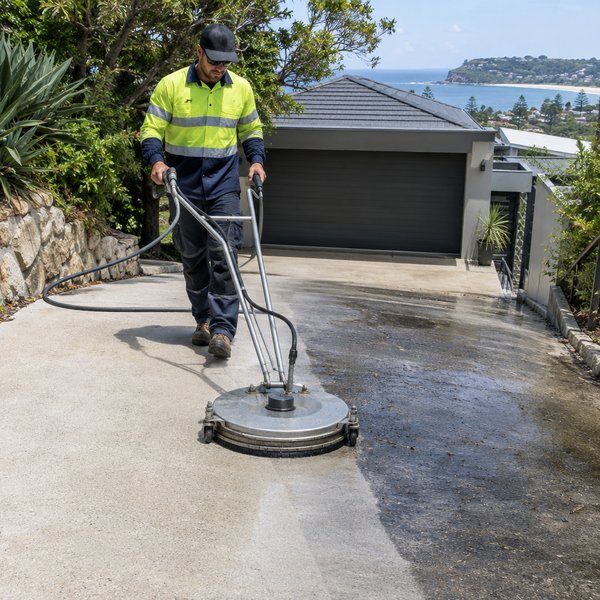
We run a rotary surface cleaner across the full driveway in overlapping passes for an even finish. Hot water lifts oil and grime from concrete, while aggregate and pavers get lower pressure to protect stones and joints. A turbo nozzle handles stubborn tyre marks at the garage entry.
We use a wand on edges, steps and the kerb crossing where the surface cleaner can't reach. Then we rinse the whole area to flush away loosened dirt and residue. Before we pack up, we walk the driveway with you so you can see the finished result.
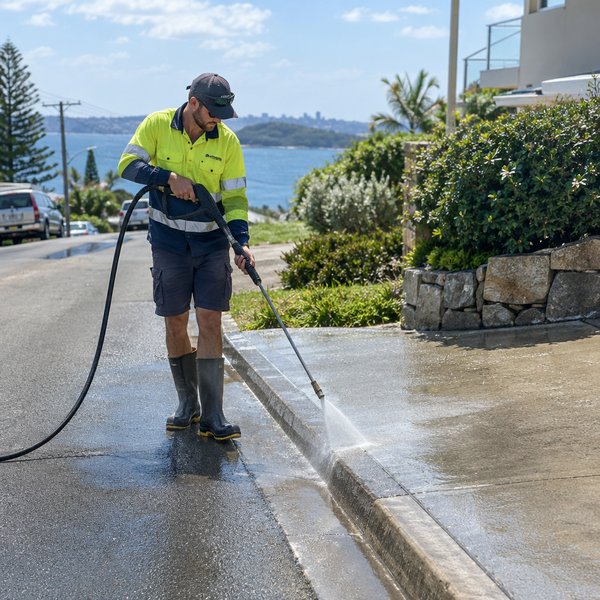
Safer, longer-lasting and better looking, with real results you can see.
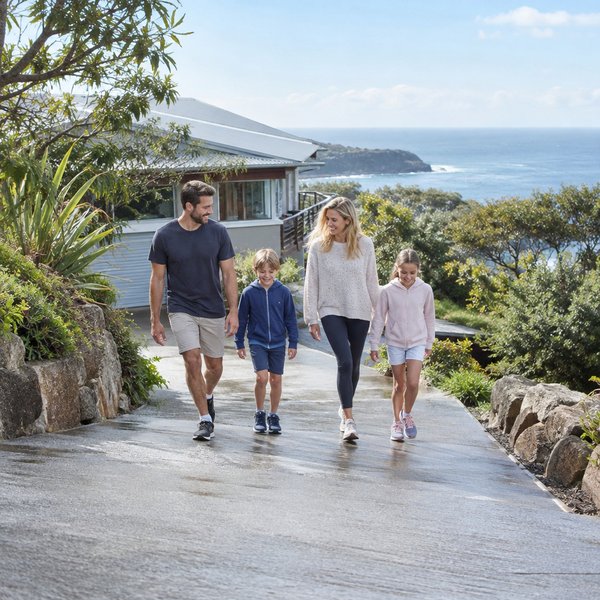
Mould and lichen turn a sloping driveway slippery, especially after a humid night or a summer storm. Removing that growth gives you, your kids and visitors better grip walking to the car or the letterbox. It also matters if you run a rental or a strata block with shared access.
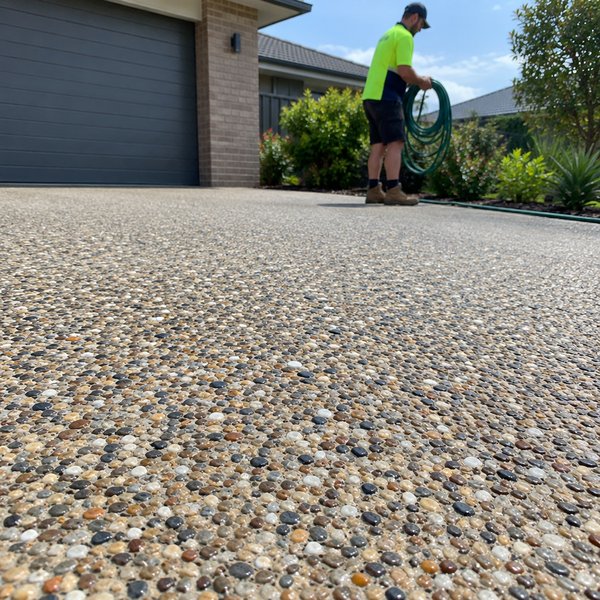
Oil soaks in and breaks down the surface over time, and mould roots hold moisture against the concrete. Regular cleaning removes both before they cause pitting, staining and crumbly edges. Exposed aggregate keeps its stones locked in when dirt and organic growth aren't working at the binder.
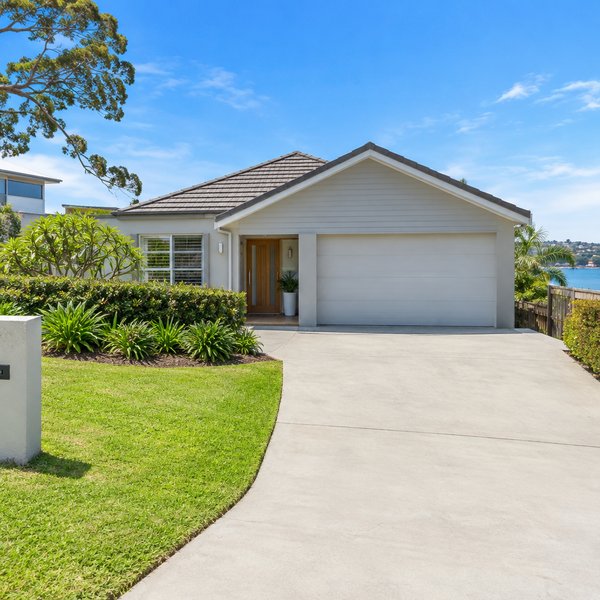
Your driveway is the first thing buyers, tenants and guests see. A clean slab makes the whole frontage look cared for and helps listing photos stand out. Landlords use it between tenancies to bring a property back to presentation standard.
We're based in Cromer and work across the Northern Beaches every week. We see how salt air, humidity and gum litter affect concrete from Manly to Palm Beach. That local experience shapes how we treat each driveway.
Plain concrete, aggregate, pavers and sandstone all react differently to water and pressure. We adjust nozzles, pressure and water temperature for each one. That protects the surface while still getting it clean.
Our hot water units cut through oil far better than cold water alone. A rotary surface cleaner gives an even finish with no wand stripes. You get a driveway that looks uniform from the street.
We contain degreaser and keep dirty wash water away from stormwater drains where we can. Garden beds and lawn edges are protected before we start. We leave the site tidy when we're done.
Common questions answered
Most oil stains lift a long way with hot water and a degreaser left to dwell before cleaning. Old stains that have soaked deep into porous concrete may leave a faint shadow. We'll tell you what to expect when we look at the driveway.
Not when it's done right. We drop the pressure and use a wider fan tip on aggregate so stones stay locked in place. If we see stones already loose or a weak binder, we point it out before we start.
It depends on shade, tree cover and how close you are to the water. A shaded driveway under gums in a damp gully grows mould much faster than a sunny slab with no trees. We can look at your conditions and suggest a sensible cleaning cycle.
The main factors are size, surface type, how heavy the staining is and how easy the access is. A steep driveway with oil stains and mould takes more time than a flat, lightly soiled slab. Request a quote and we'll give you a clear price for your driveway.
Not usually. We need cars moved off the driveway, access to an outside tap and the gate unlocked if there is one. Pets should be kept inside while we work.
We provide Driveway Cleaning throughout the Northern Beaches, NSW and surrounding suburbs.
Don't see your area? Contact us to check if we service your location!
View All Areas